


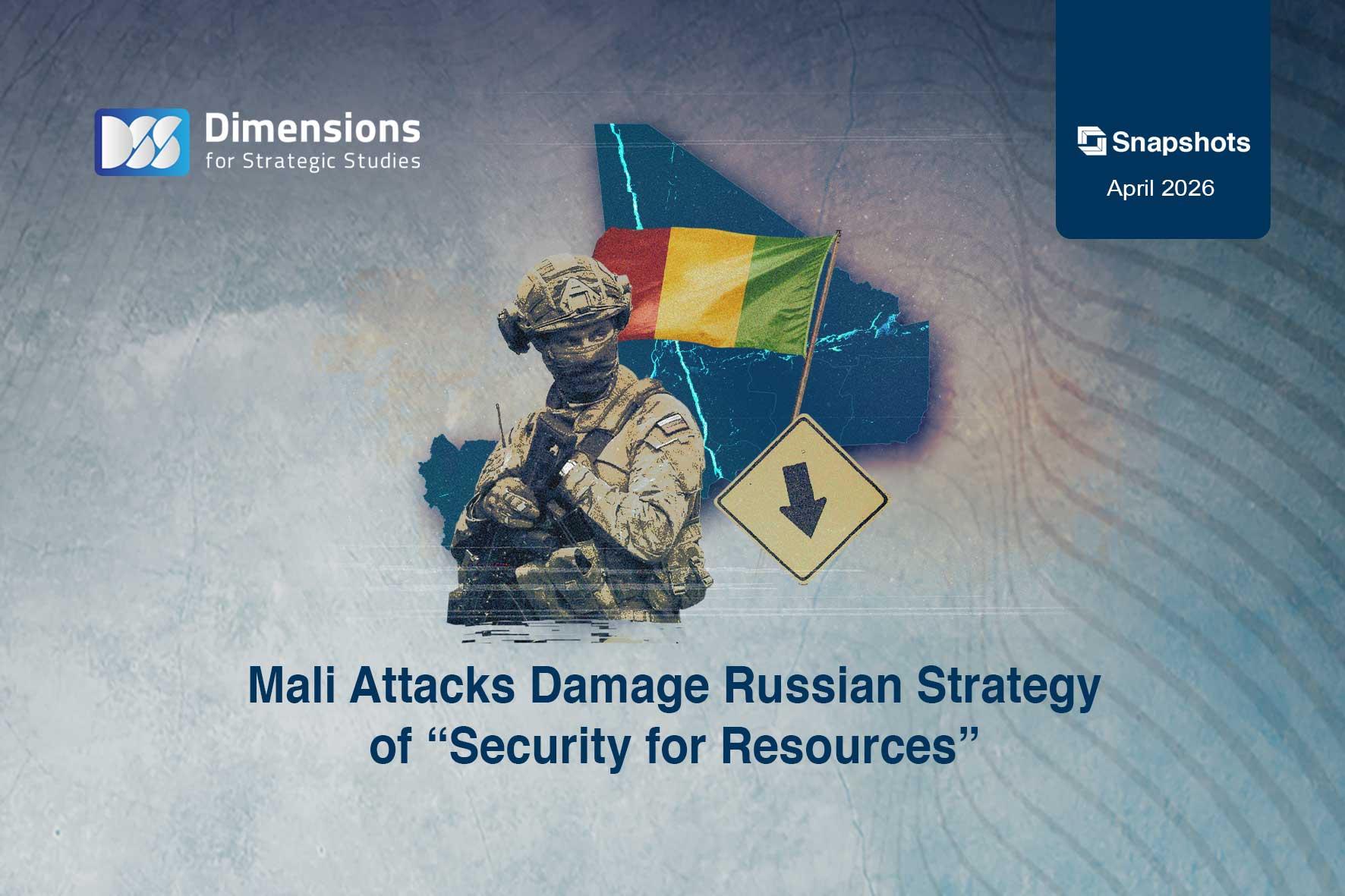
Mali Attacks Damage Russian Strategy of “Security for Resources”
2026-04-272030 view
Since mid-2025, rebels in Mali have intensified their activities against the country’s junta. Al-Qaeda affiliate Front for the Victory of Islam and Muslims (known as JNIM) has sought to tighten the noose on the capital, Bamako, while the National Movement for the Liberation of Azawad (MNLA), dominated by Tuareg tribes, has stepped up its struggle for autonomy in Mali’s vast desert north.
This trend culminated in late April with attacks in Kati and Bamako, resulting in the deaths of Defense Minister Sadio Camara and military intelligence chief Modibo Koné. The fate of Chief of Staff Oumar Diarra was unknown at the time of writing.
These latest attacks serve to undermine the transitional authority led by General Assimi Goïta, who seized power in a military coup in 2020 and forged a security alliance with Russia, effectively ending France’s presence in the country. Moscow has treated Mali as a new sphere of influence in the Sahel, and as a testing ground for its strategy of “security for resources.” It has supported Goïta’s regime with mercenaries from the Kremlin-run Africa Corps (formerly known as the Wagner Group), as well as providing security and military assistance.
Although Mali’s rulers and the Africa Corps managed to recapture the northern city of Kidal in 2023, through sheer force, such gains appear to be eroding over time, given that Russia’s support is largely symbolic. This is true only in Mali but across the Sahel, including Niger and Burkina Faso, which have turned to Russia in preference over the West.
Moscow does not appear to have fulfilled its commitments to train the joint border guards of members of the Alliance of Sahel States, including Mali. Its shortcomings also extend to the Africa Corps, hundreds of whose members were killed in 2024 and 2025 during clashes with rebels in Mali.
The latest attacks are a further setback to the model Russia has attempted to promote in the Sahel, based on providing support in exchange for resources, particularly gold. This will likely have repercussions for Moscow’s influence more broadly in Africa. It is also exacerbated by the presence of rivals to Russian influence, who can offer support with a minimum of direct military intervention, relying instead on intelligence, logistics, surveillance systems, and effective training programs. Türkiye, for example, represents a third way between the West and Russia, and has advanced military industries, particularly in the field of drones.
African governments also see China as a viable partner—one potentially better positioned than Russia to fill the security vacuum and gradually take on Moscow’s role in the Sahel region. Some or all of the region’s countries could also return to their traditional partnerships with France or the U.S.
Moscow is clearly continuing to repeat its mistakes in several areas, as it has done in Ukraine and Syria. It has leaned primarily on military force and coercion, while failing to support the development of strong governing institutions that foster development in these countries, or to promote political solutions to resolve their crises. This leaves its influence constantly vulnerable to erosion. Officials in Mali are already considering withdrawing the Africa Corps from some of the areas where it is currently deployed, due to negative public perceptions of its role.